

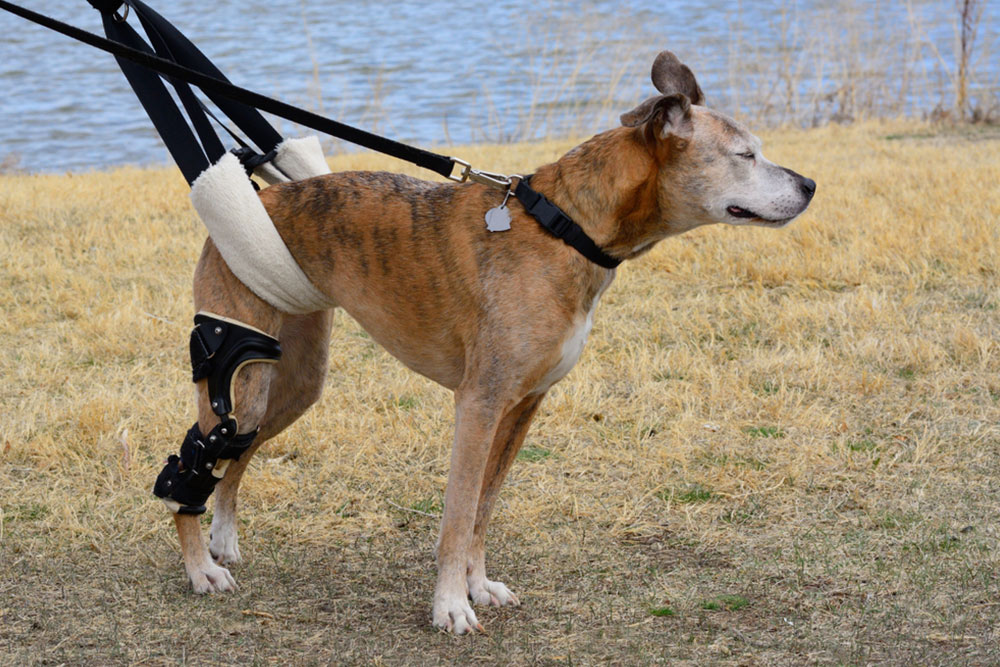
One moment a dog is mid-stride, the next they are holding a back leg off the ground and looking confused about why. CCL tears can happen suddenly during play or a run, but they can also develop slowly through progressive ligament degeneration, which is why some dogs seem to “just start limping” with no clear injury event. Either way, a compromised cruciate ligament rarely improves on its own, and the decisions made in the weeks following injury have a significant impact on long-term joint health and quality of life.
At Flora Family Vet in Kissimmee, we offer same-day urgent appointments for limping dogs who need evaluation quickly, along with the advanced diagnostics needed to understand exactly what is going on in the joint. When surgery is the right path, we refer to trusted surgical partners we work closely with to ensure your dog gets the procedure they need with a team we know and trust. Contact us to get a lame dog assessed without delay.
What Is a CCL Injury, and Why Does It Happen?
Causes, Risk Factors, and Why Some Dogs Are More Vulnerable
The cranial cruciate ligament (CCL) is the canine equivalent of the human ACL, connecting the femur and tibia inside the knee joint and stabilizing it during movement. When this ligament tears partially or completely, the joint becomes unstable, bone surfaces grind against each other, and inflammation begins a cycle that progressively damages the joint if left unaddressed.
Canine cruciate ligament injury is one of the most common orthopedic problems in dogs, and it does not always involve a dramatic athletic moment. Many cases result from gradual ligament degeneration, where the fibers weaken over time until even a minor movement triggers the final tear. Contributing factors include:
- Sudden pivoting, twisting, or stopping on hard or slippery surfaces
- Breed predisposition: Labrador Retrievers, Rottweilers, Boxers, and Bulldogs are among the higher-risk groups
- Dogs with other joint diseases, like patellar luxation or hip dysplasia, changes the normal angle of the knee and puts stress on the ligament
- Excess body weight, which increases load on the joint with every step
- The “weekend warrior” pattern, where a dog is inactive most of the week and then overexerted on weekends
- Hormonal factors: Large breed dogs spayed and neutered before full growth is complete may be at higher risk due to the influence of reproductive hormones on ligament integrity, though research is still being done.
Owners of dogs who are overweight or belong to predisposed breeds are worth having the conversation early during wellness and prevention visits, before an injury creates the urgency.
Can CCL Injuries Be Prevented?
Not entirely, but risk can be meaningfully reduced. Because many tears result from gradual degeneration rather than a single traumatic event, the goal is to slow that degeneration and reduce the forces acting on the joint over the dog’s lifetime.
Practical prevention strategies include:
- Weight management: Every pound of excess weight increases mechanical load on the joints with every step. Dogs that stay lean throughout their lives have significantly lower joint stress than dogs who carry extra weight, even for a few years.
- Consistent, appropriate exercise: Regular moderate exercise builds the muscle that supports and stabilizes the knee. Long periods of inactivity followed by intense activity, the weekend warrior pattern, stress ligament fibers unevenly and contribute to degeneration.
- Warm-ups and cooldowns: Warm-ups and cooldowns for dogs before and after activity help prepare the joint for load and reduce the sudden-force events that can trigger a partial or complete tear.
- Surface awareness: Slippery floors, steep terrain, and sudden stops on hard surfaces are all higher-risk scenarios. Area rugs on hardwood floors and avoiding rough-terrain sprinting can reduce the number of high-load events the joint experiences.
For breeds at higher risk, discussing joint health proactively at wellness visits allows us to get ahead of problems rather than respond to them.
Partial Tears: The Injury That Is Easy to Miss
Not every CCL injury is a complete rupture. Partial tears are common, and they are frequently underestimated because the dog may still bear weight on the leg, sometimes almost normally. A partial tear means some fibers remain intact, which preserves partial stability in the joint, but those remaining fibers are under abnormal load and tend to continue breaking down over time.
The typical story is a dog who seemed to pull up lame after a run, improved with rest over a week or two, and then started limping again. The apparent recovery was the inflammation settling, not the ligament healing. In most cases, partial tears progress to complete rupture without intervention, they just do so on a slower timeline.
This is why any limp that does not resolve promptly deserves a proper orthopedic evaluation rather than extended watchful waiting. Catching a partial tear early expands the options available and potentially allows for a more controlled, planned approach to treatment.
How Do You Know If a Dog Has Torn Their CCL?
Signs That Warrant Same-Day Evaluation
The classic presentation is a dog who suddenly holds a hind leg up or toe-touches while walking, often after playing, jumping, or running. But the signs are not always that obvious.
Watch for these at home:
- Hind-limb limping that worsens after exercise or a play session
- Difficulty rising from rest, reluctance to use stairs, or hesitation before jumping into the car
- Visible swelling around the knee or thickening of the joint over time
- A sitting posture where the dog holds the affected leg off to one side rather than tucking it underneath
- Stiffness the morning after activity that loosens up as the dog moves around
Any of these signs in a dog who was previously moving normally warrants prompt evaluation. We offer same-day urgent care for dogs showing sudden lameness, and can often provide a working diagnosis that same visit.
How Is a CCL Tear Diagnosed?
Orthopedic Exam and Imaging
Diagnosis starts with a hands-on orthopedic assessment. Two specific tests, the cranial drawer test and tibial thrust test, evaluate whether the tibia moves abnormally relative to the femur when the joint is manipulated in specific ways. Abnormal movement on either test strongly indicates cruciate compromise.
X-ray diagnostic imaging is used to assess bone alignment, evaluate the degree of secondary joint changes like arthritis that may already be present, and rule out fractures or other causes of lameness. Our in-house digital radiography provides high-quality images with immediate results, which means the diagnostic conversation can happen the same day rather than days later.
For complex or ambiguous cases, the small animal MRI guide explains how MRI adds soft tissue detail that X-rays cannot capture, including visualization of partial tears, meniscal damage, and cartilage changes.
What Are the Treatment Options?
Conservative Management: When and for Whom
Surgery is not always the only path, though it is usually the recommended one for medium and large dogs. Conservative management, meaning strict rest, anti-inflammatory medication, physical rehabilitation, and activity modification, is sometimes considered for small dogs under 25 to 30 pounds, for older dogs whose activity levels are low, or for dogs whose health status makes anesthesia higher risk.
The honest reality of conservative management is that it manages instability rather than resolving it. The joint remains mechanically unstable, which means ongoing inflammation, progressive cartilage wear, and secondary arthritis are likely outcomes. Some small dogs do function acceptably long-term with conservative care, but they require careful monitoring and realistic expectations. For most dogs, particularly larger or more active ones, conservative management results in severe arthritis.
If you are considering conservative management for any reason, we can walk through what that monitoring plan looks like and what signs would indicate the approach is not working.
Surgical Options: What to Know Before the Referral Conversation
When surgery is the right path, we refer to trusted surgical partners who perform the procedure with the same level of care we expect for our own patients. Understanding the surgical options helps owners ask better questions and feel more confident in the process.
TPLO (Tibial Plateau Leveling Osteotomy) involves cutting and rotating the top of the tibia to change the angle of the joint surface, eliminating the abnormal forward movement of the tibia that the CCL normally prevents. This approach is biomechanically robust and is generally preferred for larger, more active dogs because it does not rely on scar tissue for long-term stability. TPLO surgery has a well-established long-term outcome record and is currently the gold standard for medium to large breed dogs.
Extracapsular repair (also called lateral suture or TightRope technique) uses a strong synthetic material outside the joint to mimic the function of the torn ligament. This approach is generally considered appropriate for smaller dogs or less active patients where the long-term mechanical demands on the joint are lower.
Key factors that guide the recommendation:
| Factor | Favors TPLO | Favors Extracapsular |
| Body weight | Over 25–30 lbs | Under 25 lbs |
| Activity level | High | Low to moderate |
| Age | Young to middle-aged | Older or lower activity |
| Tibial plateau angle | Steep | Normal to mild |
We discuss these variables with you before the referral so you understand the reasoning and can have an informed conversation with the surgical team.
What Happens If a CCL Tear Goes Untreated?
This is an important question, and the answer is worth being direct about. An unstable joint does not stabilize on its own. Without surgical intervention or strict conservative management, the following tend to occur over time:
- Progressive arthritis: Joint instability causes continuous cartilage wear. Inflammation becomes chronic, and arthritis develops and worsens regardless of activity level.
- Meniscal damage: The meniscus, a cartilage cushion inside the joint, is frequently damaged at the time of the CCL tear or shortly after due to abnormal movement. This causes significant additional pain and is more likely to occur or worsen with continued unmanaged instability.
- Muscle atrophy: Dogs compensate by offloading the affected leg, which leads to muscle wasting that makes recovery harder and puts more strain on the other limbs.
- Decreased quality of life: Chronic pain from an unstable joint affects a dog’s willingness to move, play, and engage. What looks like a dog “adapting” is often a dog managing pain.
Dogs that appear to improve without treatment are typically compensating, not healing. The underlying instability and inflammatory process continue even when lameness seems to resolve.
The Other Knee: A Risk Worth Taking Seriously
One of the most important things to understand about CCL disease is that it is rarely a one-time event. Studies suggest that 40 to 60 percent of dogs who tear one CCL will experience a tear in the other knee as well, often within one to two years of the first injury.
This happens for several reasons. The same underlying ligament degeneration that affected the first knee is typically present in both. During recovery from a tear in one knee, the opposite leg carries significantly more of the dog’s body weight, increasing the load on an already compromised ligament. Dogs that are overweight, belong to high-risk breeds, or have steep tibial plateau angles are at particular risk.
The practical implication is this: successfully treating one CCL tear is only part of the picture. Long-term joint health, weight management, appropriate conditioning, and follow-up monitoring matter for both knees, not just the one that was operated on. We talk through what this monitoring looks like as part of our ongoing wellness and prevention visits.
Recovery and Life After a CCL Injury
What the Post-Surgical Recovery Period Looks Like
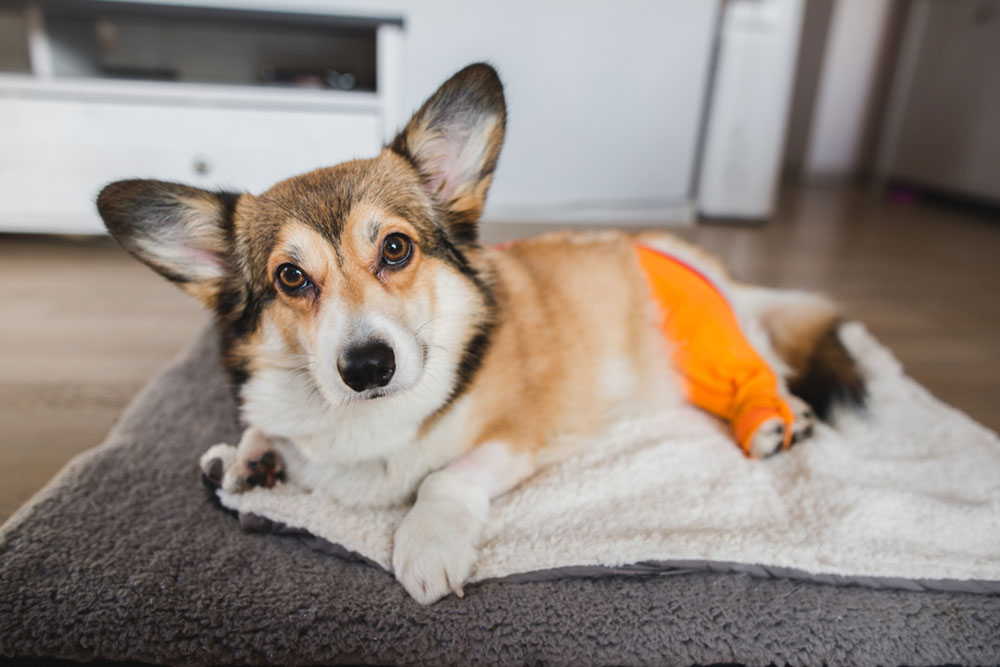
For dogs who have surgery, recovery is structured and staged. The first two weeks involve very restricted movement. Gradual reintroduction of controlled leash walks follows, then progressive exercises as healing advances. Full return to normal activity for most dogs is around 12 to 16 weeks post-TPLO, though full muscle mass recovery can take longer.
Surviving crate rest with your dog is genuinely one of the harder parts of CCL recovery for owners. Dogs who are restricted often become anxious or restless, and the temptation to allow more freedom once they seem to feel better is real. Pain relief removes the dog’s internal check on how much they are doing, making owner-enforced restriction critical during the healing phase.
Tips that help:
- Use puzzle feeders and stuffed chew toys for mental stimulation without physical exertion
- Keep the crate in the room where the family spends the most time to reduce isolation-related stress
- Maintain a consistent daily routine so the dog can anticipate structure
- Cover crate sides if the dog becomes reactive to movement outside
Laser therapy is a valuable adjunct during CCL recovery, reducing inflammation and post-operative pain and supporting tissue healing. We offer laser therapy in-house as part of a comprehensive post-surgical support plan, and it can be started as soon as the dog comes home from surgery.
For joint support during and after recovery, TruBenefits Osteo provides targeted joint and cartilage support, and TruBenefits Omegas offer anti-inflammatory omega fatty acid supplementation that benefits both healing tissue and long-term joint health.
Long-Term Joint Health After a CCL Tear
A dog who has had a CCL repair can return to a good quality of life and normal activity. That outcome is most reliably achieved when surgery is followed by appropriate rehabilitation, maintained at a healthy weight, and given appropriate exercise going forward.
Rehabilitation therapies including hydrotherapy, therapeutic exercises, and passive range-of-motion work support faster, more complete recovery and are worth discussing with your surgical referral team.
Some degree of arthritis in the affected joint is a common long-term reality even after a successful repair. Managing it proactively, through weight control, joint supplements, appropriate exercise, and periodic monitoring, keeps it from becoming a significant quality-of-life issue.
FAQ: CCL Injuries in Dogs
Can a CCL tear heal without surgery?
In small dogs, conservative management sometimes produces acceptable function, though secondary arthritis tends to be more significant than with surgical repair. For medium and large dogs, conservative management rarely produces the stability needed for a good long-term outcome. Every dog is different, and we will walk through the options honestly for your individual pet.
How long until a dog is back to normal after TPLO?
Most dogs return to normal activity by 12 to 16 weeks post-TPLO, though full muscle mass recovery can take longer. The first four to six weeks are the most restricted, and progress should be gradual and guided by the surgical team.
Is the other knee at risk?
Yes. Studies suggest 40 to 60 percent of dogs who tear one CCL will eventually experience the other as well. Weight management, appropriate conditioning, and avoiding high-impact, repetitive activities reduce but do not eliminate that risk. Monitoring both knees is an ongoing part of your dog’s care after a CCL diagnosis.
What does a CCL tear feel like to the dog?
Joint instability causes active inflammation and pain. Most dogs will weight-bear inconsistently or not at all on the affected leg. Some adapt over weeks by compensating with other limbs, which is not the same as healing and can create secondary problems in the compensating joints.
My dog seems better after a few weeks of rest. Does that mean the CCL healed?
Almost certainly not. What typically improves with rest is the acute inflammation and associated pain, not the underlying instability. Dogs that appear to recover without treatment are compensating, and the joint continues to sustain damage. If your dog seemed to recover and then re-injured, this is a common pattern with partial tears progressing to full rupture.
Helping Your Dog Get Back to Their Best
CCL injuries are common, treatable, and manageable when caught early and addressed thoughtfully. The dogs who do best are the ones whose owners noticed something was off, sought evaluation promptly, committed to the treatment and recovery process, and maintained the joint health habits afterward.
We are equipped for the full arc of care outside the operating room: same-day evaluation, precise diagnostics, trusted surgical referrals, in-house laser therapy, and the kind of individualized follow-through that makes recovery feel supported rather than overwhelming. Book an appointment online or reach out to us if your dog is limping or you have questions about their joint health.



Leave A Comment