

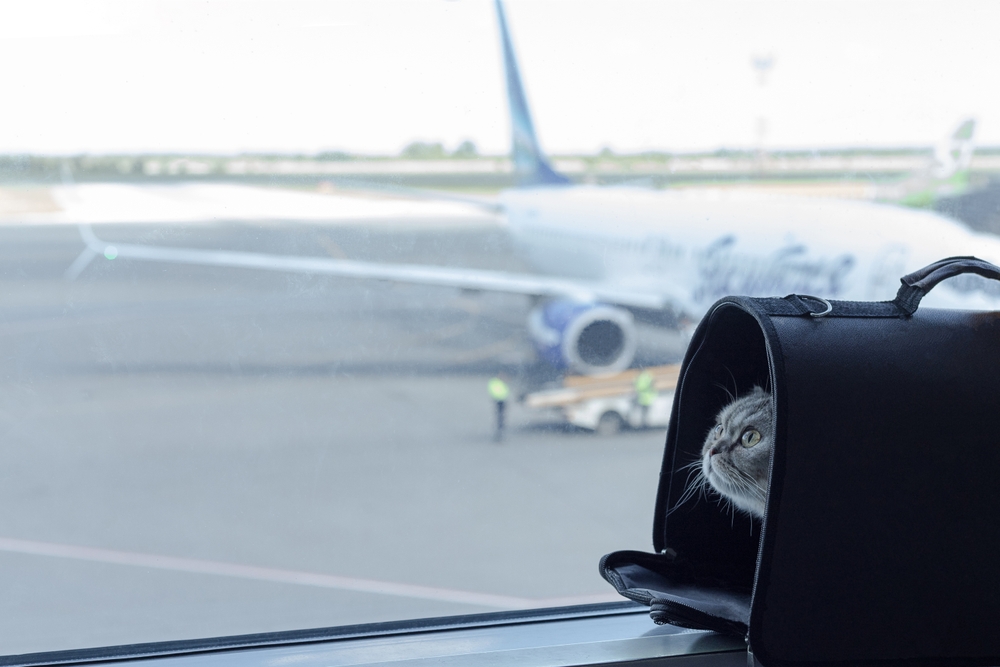
Flying with your dog or cat almost always means a health certificate signed by a veterinarian, and the timing is stricter than most people expect. Most airlines and destinations require that exam within a set window before travel, often ten days, and some states or countries add rabies proof, antibody testing, extra vaccines, or a microchip on top of that. Miss one requirement and you can be turned away at the gate with a nonrefundable ticket, which is why the planning matters as much as the packing. Start early and the whole process becomes a checklist instead of a scramble.
Flora Family Vet in Kissimmee handles the travel side of pet care from start to finish, including the timed health certificate exam and vaccines and microchip guidance matched to where you are headed. Because destination rules vary so much, let us know as soon as you know you’re traveling, even if it’s a year ahead. Good preparation means a lower chance of facing quarantines or being turned away at a gate. If you have a trip coming up, tell us where you are going and we will help you build the timeline.
Quick Facts
- Most airlines and destinations require a health certificate from an exam completed within a set window before travel, often as short as ten days, so the timing matters as much as the document itself.
- Domestic trips are usually straightforward, but Hawaii and international destinations can require microchips, extra vaccines, titer tests, and waiting periods that take months to complete.
- Coming home counts too, since every dog entering or returning to the United States now needs its own federal paperwork, and some of it has to be done before you ever leave.
- Cabin pet spots are limited and fill quickly, so reserving your pet’s spot the moment you book your own ticket is one of the smartest early moves you can make.
What Is a Pet Health Certificate and Why Do You Need One?
A pet health certificate is an official document, signed by a licensed veterinarian, stating that your dog or cat was examined and found healthy enough to travel. It protects both animal and public health by confirming your pet is not carrying anything contagious across state or country lines. Requirements shift depending on where you are going and how you get there.
Why do pets need a health certificate to travel?
The certificate is a green light confirming that a veterinarian examined your pet and cleared them to go. The pet travel requirements change based on your destination, your airline, and whether the trip is domestic or international, and some countries require a federal USDA endorsement on top of the vet’s signature, which adds processing time you have to plan around. Our team runs these travel exams and prepares the forms and testing your specific trip calls for.
When should you schedule the travel exam?
The exam has to fall inside your destination’s timing window, and those windows are tighter than people expect. Many airlines want the certificate dated within ten days of travel for domestic trips, while international destinations often work on different timelines because of extra testing and paperwork. The smartest approach is a multi-visit plan: an early planning visit to sort out vaccines, treatments, and approvals, then the timed certificate exam close to departure.
- Start with a planning visit: For domestic travel (excluding Hawaii), come in a few weeks ahead so vaccines and preventives are current and any surprises have time to resolve.
- Build in extra time for international trips: The paperwork usually isn’t finished at your appointment, because USDA endorsement is required afterward and that review time is exactly why we recommend booking months ahead. Some destinations also require notarization.
- Book the certificate exam last: Schedule the timed exam so the certificate date lands safely inside your airline’s and destination’s window.
Our wellness care includes travel-readiness exams and medication planning, so both visits can happen in one familiar place.
What if your pet ships without you?
When a pet flies as unaccompanied cargo instead of alongside you, the process gets more complex: timelines tighten, documentation requirements grow, and international shipments often need customs clearance and coordination with third-party shippers. A small error, like a certificate dated a day outside the window or a missing endorsement stamp, can mean denied transport or quarantine on arrival.
What Do You Need to Travel with Pets Inside the United States?
Domestic travel is usually the simplest kind of pet trip, but “simple” does not mean “no rules.” Requirements differ from state to state, airlines set their own policies on top of that, and a couple of destinations, Hawaii most of all, play by a completely different rulebook.
Do you need a health certificate for domestic flights?
In many cases, yes, even for a flight from Florida to another state. The state-by-state requirements differ from one destination to the next, and an airline may still demand a certificate even when the state you are entering does not, so checking both before you book saves a scramble later. A quick habit that prevents most problems:
- Check the destination state: Look up the animal health rules for the state you are flying into, since some require certificates and specific vaccines.
- Check the airline: Airlines set their own certificate, carrier, and booking rules regardless of state law.
- Do both before booking: Confirming requirements before you buy the ticket keeps a nonrefundable purchase from turning into a problem.
What makes Hawaii’s rules so strict?
Hawaii is the one domestic destination that trips families up, and it is worth its own warning. Because the islands are rabies-free, the Hawaii pet import requirements are the toughest in the country, layering microchipping, multiple rabies vaccinations, a rabies titer, and strict waiting periods that can mean up to 120 days of quarantine when a single deadline is missed. Start at least six months ahead.
| Hawaii Requirement | Why It Matters |
| Microchip | Must be the correct type, and in place and readable before other steps count |
| Two rabies vaccinations | Spaced correctly, only after microchipping, with documented dates |
| Rabies titer (blood test) | Confirms immunity; has its own waiting period |
| Parasite prevention | Pets must be treated with long-acting preventatives within a certain date of arrival |
| Waiting periods and deadlines | Missing one can trigger quarantine up to 120 days |
We help families work backward from their Hawaii travel date to hit every deadline, including the rabies titer testing Hawaii requires.
How Do You Prepare for International Pet Travel?
International travel is where early planning pays off the most. Every country writes its own entry rules, those rules can be strict, and getting them wrong ranges from delays to a pet being refused entry. Give yourself a long runway.
How do you research a country’s pet entry rules?
Start early and go straight to the official source. Each country writes its own rules for international pet travel, those policies can change without much notice, and island nations are notoriously strict, which is why starting your research at least six months out gives you room to adjust. Countries like Japan and Australia have even longer time requirements, and some require months-long quarantines even if you do everything right. Some countries impose breed and age restrictions, and a few reserve the right to refuse or even euthanize pets that fail to meet entry requirements, so it is worth an honest question: if your dog or cat does not have to come along, boarding at home may genuinely be the kinder, safer choice. When testing is required, our in-house lab work, ultrasound, and digital X-ray help us complete and document what a destination demands.
What paperwork does your dog need to come back home?
This is the step that strands dogs abroad, and it surprises almost everyone. The trip home has its own federal requirements, and some of them have to be handled before you leave. Every dog entering or returning to the United States needs a CDC Dog Import Form receipt, and that applies to American dogs simply coming home, not only to dogs being imported. You complete the form online and carry the receipt, printed or on your phone. Your dog also has to be at least six months old, microchipped with a scannable chip, and healthy on arrival.
If your itinerary touches a country the CDC considers high risk for dog rabies, even briefly, the requirements grow, and here is the part that catches families out: a US-vaccinated dog returning from a high-risk country needs a Certification of U.S.-issued Rabies Vaccination form, completed by a USDA-accredited veterinarian before the dog leaves the country. It cannot be issued once you are already abroad, and a standard rabies certificate is not the same document. That is exactly why the return leg belongs in the planning conversation before you book rather than after you land, and it is work we can do during your pre-travel visit if your destination calls for it.
What about traveling to Canada or Mexico?
Our two closest neighbors are far more manageable than an overseas move, but “manageable” still means following the checklist exactly. Pet travel to Canada leans heavily on current rabies vaccination and clean, complete paperwork, since incomplete documents are what turn a routine crossing into a delay or an outright denial. Pet travel to Mexico follows the same pattern, so erring on the side of more documentation is always the safer bet, and our team handles these cross-border certificates regularly.
What Are the Airline Rules for Flying with Pets?
Airlines are their own layer of rules, separate from anything a state or country requires. Each carrier sets limits on size, carrier dimensions, breeds, temperatures, and fees, and sorts pets into a few travel categories. Reading the fine print before you book keeps you from paying for a ticket your pet cannot actually use.
How do airline pet policies work?
Every airline is a little different, so the safest move is to read your specific carrier’s policy the same day you book. The rules for airline pet travel cover size and weight limits, carrier dimensions, accepted breeds, seasonal temperature cutoffs, and fees, sorting pets into in-cabin, checked baggage, and cargo, with some carriers refusing flat-faced breeds outright.
Cabin spots are the most sought-after and the first to fill, so reserve your pet’s spot the moment your own ticket is confirmed. When you are weighing carriers and options, our Kissimmee veterinarians can talk through which plan is safest for your particular pet.
How do you train a pet to love their carrier?
The carrier should feel like a cozy den, not a trap sprung on travel day. Pick an airline-approved carrier early and give your dog or cat weeks to warm up to it. A gradual approach works far better than forcing the issue:
- Leave it out: Set the open carrier in a favorite room with a familiar blanket inside so it becomes ordinary furniture.
- Add good things: Toss treats, meals, and toys inside so your pet chooses to go in on their own.
- Build up time: Start with the door open, then closed for short stretches, then short car rides, lengthening slowly.
- Skip the sedatives: Sedation is usually not recommended for flights unless a veterinarian specifically advises it, since sedatives can affect balance and breathing at altitude.
Flora Family Vet is an AAHA-accredited hospital, and the same low-stress handling we use in the exam room shapes the calming strategies we suggest, tailored to your pet’s personality.
How Do Health Conditions Affect Travel?
Travel asks a lot of a body: altitude changes, temperature swings, cramped confinement, and a schedule turned upside down. For a healthy young dog or cat, that is usually just tiring. For a pet with an underlying condition, the same demands can be genuinely risky, which is why a pre-travel conversation matters so much. Certain conditions deserve extra caution before any trip:
- Heart disease: A pet with heart disease feels the demands of travel more acutely, because altitude and temperature swings ask the heart to work harder when it has the least reserve to spare.
- Flat-faced (brachycephalic) breeds: Flat-faced dogs and cats already work hard to breathe, and the heat and confinement of travel can tip a compromised airway toward respiratory distress.
- Stress-sensitive conditions: Conditions like diabetes and Addison’s disease can destabilize when a pet’s routine is upended, and the stress of a trip is exactly the kind of trigger that can push these pets into a crisis.
Destinations carry their own health risks too, since regional parasites and diseases vary from place to place. A pre-travel visit is the right time to review your pet’s health status and get ahead of it, including updating your pet’s preventives before you leave so they are covered for wherever the trip takes them.
What Happens at the Pre-Travel Exam and What Should You Pack?
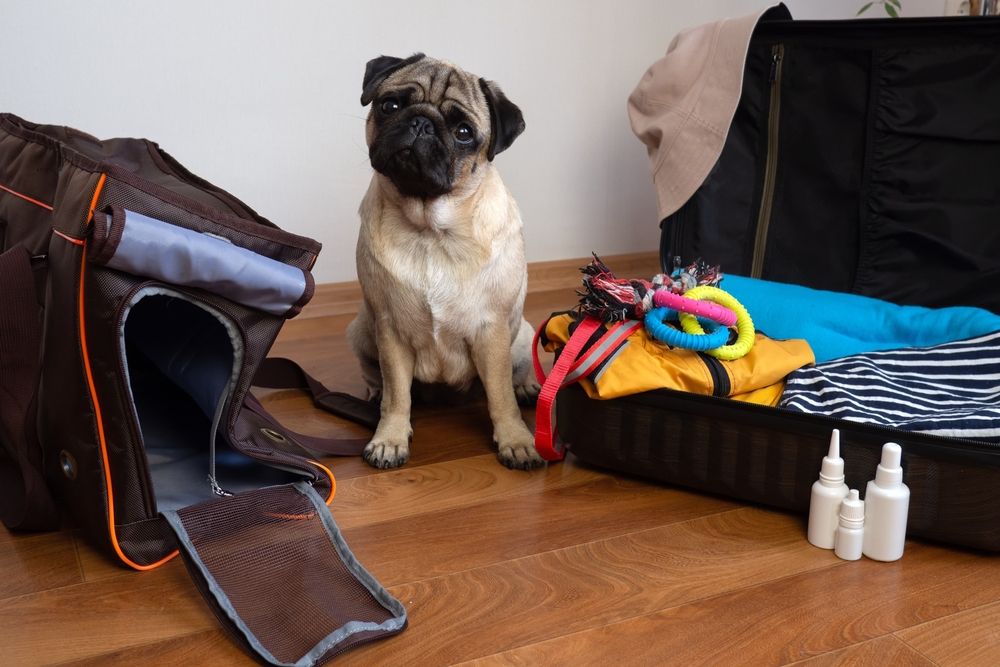
At the pre-travel exam, we confirm your dog or cat can handle the trip, make sure preventive care is current, and verify ID tags and microchip contact information. Packing comes down to one dedicated travel kit: documents, your pet’s usual food, medications, ID supplies, and a comfort item from home.
What does the pre-travel exam check?
Even when no certificate is legally required, pet travel safety starts with an exam that confirms your dog or cat can handle the trip, verifies preventive care is current, and catches small problems before they become roadside emergencies. It is also the moment to update ID tags and confirm your microchip registration lists a current phone number, because a chip only helps if the contact information is right. Our travel appointments leave room to look closely and answer every question, and you can schedule a pre-travel consultation whenever your trip takes shape.
What belongs in a pet travel kit?
A well-stocked kit means you are not hunting for a leash or a vaccine record at the gate. Pack a dedicated bag and keep it with your carry-on, not in checked luggage.
- Documents: Health certificate, vaccine records, and microchip information, plus copies stored on your phone.
- Food and water: Enough of your pet’s usual food to avoid a sudden diet change, plus a collapsible bowl.
- Medications: Any daily medications in labeled containers, with a little extra in case of delays.
- ID supplies: An up-to-date tag, a spare leash, a recent close-up photo of your pet, and one of you with your pet to help prove ownership.
- Comfort items: A familiar blanket or toy that smells like home.
On travel day, offer a light meal a few hours before departure rather than right before, keep documents organized and reachable, and watch for signs of stress like heavy panting, drooling, or trembling.
Frequently Asked Questions About Traveling with Pets
How far in advance should I get my pet’s health certificate?
It depends on where you are going. For most domestic flights, the certificate must be dated within a short window, often ten days, so that exam happens close to departure. The bigger head start is for everything around it: booking a planning visit weeks ahead for domestic trips, and starting international or Hawaii preparation at least six months out because of titer tests, waiting periods, and USDA endorsement.
Can I sedate my pet to keep them calm on a flight?
Usually not, and it is important to check with us first. Sedatives can affect a pet’s balance and breathing, and those effects are riskier at altitude in a pressurized cabin. Many airlines discourage or prohibit sedated pets for that reason. A better plan is early carrier training so the crate already feels safe, plus non-sedating calming strategies we can tailor to your pet. If sedation is ever appropriate, that is a decision we make together at an exam.
What if my pet gets sick right before we leave?
Reach out to us right away rather than pushing through. A pet that is unwell may not be cleared to fly, and a certificate cannot be signed for a pet that is not healthy. Catching illness early gives us the best chance to treat it and still keep your timeline intact, which is exactly why we hold room for same-day and urgent visits. The sooner we see your pet, the more options we have to get your trip back on track.
Ready for Takeoff: Planning Pet Travel with Confidence
Traveling with your dog or cat does not have to be stressful. With early preparation, accurate documents, and a carrier your pet already trusts, the whole trip turns from a source of anxiety into a well-run checklist. The families who plan ahead are the ones boarding calmly while everyone else scrambles at the gate.
We are here for every step of that plan, from answering the “where do I even start” questions to running the exam, preparing the health certificate, and confirming your pet is truly ready for the journey. If a trip is on the horizon, reach out to map your travel plan and we will build a clear, stress-free timeline together.




Leave A Comment