

“He has always been a puker” is the sentence that lets chronic vomiting hide, and the hiding is what costs your pet: weight that slips away a few ounces at a time, nutrients that never get absorbed, and conditions like inflammatory bowel disease or pancreatitis advancing quietly in the background. A healthy dog or cat clears the occasional bad meal or hairball within a day. Vomiting that returns week after week, especially with a shrinking appetite, a thinning body, or on-and-off diarrhea, is a pattern rather than an event, and no quick fix erases a pattern. Pinning down the cause runs stepwise, from lab work and imaging through a food trial and sometimes to a biopsy of the gut lining. The earlier that path starts, the less the waiting costs your pet in weight, comfort, and options.
Flora Family Vet offers same-day urgent care when a vomiting pet takes a sudden bad turn, and scheduled workups when the vomiting has gone on for weeks or months. Our AAHA-accredited diagnostic workups for dogs and cats in Kissimmee start with in-house bloodwork and parasite screening, then add ultrasound and X-ray imaging to see what the stomach and intestines are doing. When occasional vomiting has turned into routine, give us a call so we can find the cause.
When Vomiting Becomes a Pattern
- Occasional vomiting that clears within a day is usually nothing, but vomiting that repeats for weeks, especially with weight loss or a shrinking appetite, is a pattern worth investigating.
- Chronic vomiting has many possible causes, from food and scavenged objects to kidney disease, hyperthyroidism, and inflammatory bowel disease, so the workup moves one step at a time.
- Some vomiting is a true emergency: blood in what comes up, a bloated or painful belly, repeated unproductive retching, or an inability to hold water down all mean call right away.
- A clear diagnosis, whether it comes from bloodwork, a diet trial, or a biopsy, is what makes treatment work, and we build the plan around what the testing shows.
What Causes a Dog or Cat to Vomit for Weeks or Months?
Chronic vomiting rarely traces back to a single system. Food and dietary indiscretion, systemic organ disease like kidney or liver trouble, and problems inside the gut itself such as inflammatory bowel disease all sit on the list.
Finding the root cause is one of the more frustrating parts of the process, sometimes taking several appointments and rounds of testing before the picture sharpens. Our veterinary team keeps working until we find the cause rather than treating in the dark and hoping.
Food, Diet, and What Gets Eaten That Shouldn’t Be
Food is one of the most common contributors to chronic vomiting and one of the last things pet families think to question, which makes thoughtful pet food selection a real part of the diagnostic picture. A true food allergy is an immune reaction to a specific protein, while a food intolerance is trouble digesting an ingredient without the immune system involved. Constantly switching diets or handing out a rotating cast of treats muddies the water, since it’s nearly impossible to tell which ingredient is the trigger.
Then there’s everything a pet eats that never came from a bowl. The trash-can raider, the sidewalk scavenger, the dog who samples goose or rabbit droppings on a walk: all of it can irritate the gut for days. Swallowed fabric, small toys, and other scavenged items can lodge partway through the intestines, and these partial GI obstructions sometimes produce on-and-off vomiting rather than the sudden crisis most families expect. When a partial blockage tips into a complete one, we may need to surgically remove a lodged object before it causes lasting damage.
Organ Disease That Shows Up as Vomiting
Vomiting isn’t always a stomach problem, and chronic kidney disease is one of the most common of several organ conditions that trigger nausea as the body struggles to clear waste. Treating the GI signs without addressing what’s driving them won’t hold, which is why we look at the whole patient before settling on the gut.
| Condition | Why it can trigger vomiting |
| Chronic kidney disease | Waste builds up in the bloodstream as filtering fades, and that buildup leaves a pet nauseated. |
| Liver and gallbladder disease | A struggling liver or blocked bile flow disrupts digestion, appetite, and how the body processes toxins. |
| Hyperthyroidism | An overactive thyroid, common in older cats, speeds the whole system up and often brings vomiting with weight loss. |
| Pancreatitis | An inflamed pancreas causes pain and queasiness, sometimes flaring on and off for weeks. |
Problems Inside the Gut Itself
Once systemic causes are ruled out, the focus shifts to the gut itself, where inflammatory bowel disease is among the most common culprits and often needs very different treatment than a tumor or ulcer would. Beyond IBD, several other gut disorders land on the list:
- Intestinal lymphoma: A cancer of the gut’s immune cells that can look almost identical to IBD early on.
- Gastric ulcers: Raw, eroded spots in the stomach lining that may bleed and darken the vomit.
- Bilious vomiting syndrome: Bile irritating an empty stomach, classically first thing in the morning.
- Pyloric stenosis: A narrowed stomach outlet that slows food from leaving, seen more in certain breeds.
- Gastric cancer: A less common but serious cause, and part of why weeks of vomiting need a proper workup.
Telling these apart leans as much on your observations at home as on any single test, so the notes you bring matter.
Could Fast Eating or Everyday Stress Be Behind the Vomiting?
Two of the most overlooked triggers have nothing to do with disease: a pet who eats too fast, and a pet living with ongoing stress. Both produce vomiting that looks identical to a medical cause, which is part of why they get missed for so long.
The Dog Who Inhales Dinner in Eight Seconds
When a pet eats so fast that barely chewed food comes right back up, the fix is structural rather than medical, and interactive feeders that force slower, smaller mouthfuls often solve it. This “scarf and barf” pattern shows up most in multi-pet homes and in animals with a history of uncertain food access, where speed once meant survival. Feeding pets in separate rooms and offering smaller, more frequent meals takes the pressure off.
Stress and Anxiety You Might Not See
Chronic stress is an underappreciated driver of GI upset, and feline stress from routine changes, new household members, or ongoing tension can trigger it. Dogs feel it too, though cats tend to route anxiety through their stomachs more readily. Watch for the company it keeps: hiding, overgrooming, or a shift in how your cat interacts with the household often turns up alongside the vomiting and points toward stress.
When Should a Vomiting Dog or Cat Be Seen?
Occasional vomiting that resolves within a day is usually nothing to chase. Once it repeats over several weeks, or turns up alongside other changes in how your pet feels and looks, it’s crossed from an event into a pattern that needs an exam.
What the Vomit Itself Is Telling You
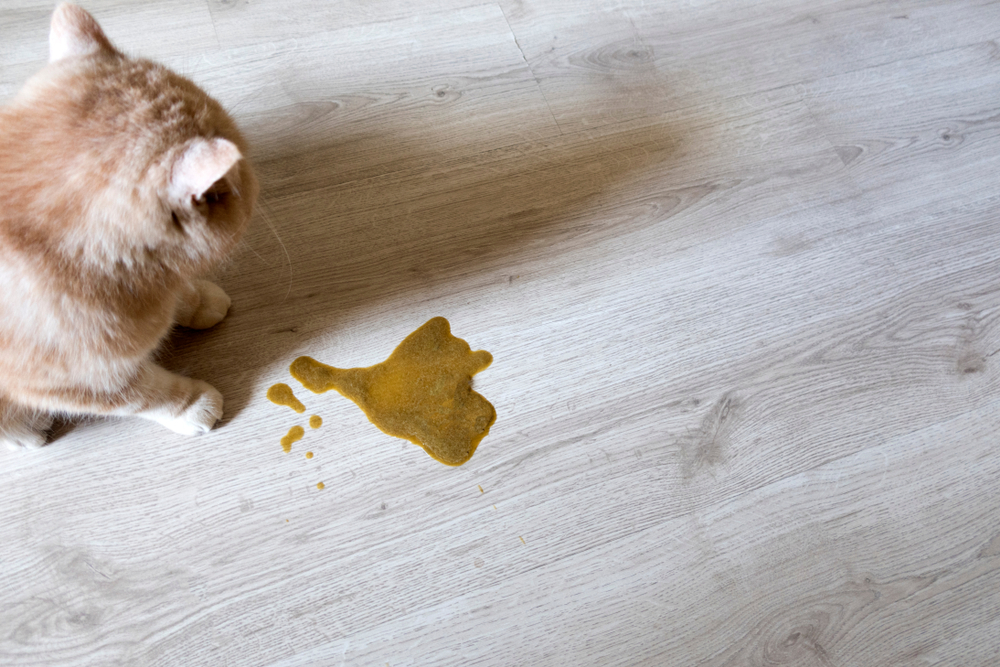
Color, texture, and contents are the first clues, and the appearance of vomit can narrow the list of causes before any testing begins. Jot down the timing, how often it happens, how soon after a meal it hits, and what it looks like. A quick phone photo helps too, even if it feels odd to take one.
| What comes up | What it may suggest |
| Yellow or green bile | An empty stomach or bile backing up, common with morning vomiting |
| Undigested food, sometimes tube-shaped | Possible regurgitation rather than true vomiting, occasionally from an esophageal issue like megaesophagus |
| Dark, coffee-ground material | Digested blood from higher in the tract |
| Bright red blood | Fresh bleeding in the mouth, esophagus, or stomach |
| Foamy white liquid | Stomach acid or mucus, often on an empty belly |
Signs That Turn Wait-and-See Into a Visit
A handful of signs also tip the scale toward booking an appointment:
- Unexplained weight loss: Ounces slipping away over weeks, even when the appetite looks normal.
- Frequent hairballs: More than one a month signals an issue.
- Increased thirst or urination: Often an early flag for kidney or hormonal disease.
- Low energy or new hiding: A pet who’s gone quieter or more withdrawn than their usual self.
- On-and-off diarrhea: Loose stool that comes and goes alongside the vomiting.
- Older age: Seniors warrant a lower threshold, since age-related organ disease often announces itself first as chronic vomiting.
Signs That Mean Call Right Now
A few situations mean picking up the phone now rather than booking for later, because they can turn dangerous quickly:
- Blood in the vomit: Bright red streaks or dark, coffee-ground material.
- A bloated or painful belly: Especially in a deep-chested dog, this can signal a life-threatening emergency.
- Unproductive retching: Repeated heaving that brings nothing up.
- Unable to keep water down: When no fluids stay put, dehydration sets in fast.
- Severe lethargy or collapse: A pet who’s limp, weak, or hard to rouse.
- The very young or very old: Puppies, kittens, and seniors with vomiting plus other symptoms have far less reserve.
Flora Family Vet offers same-day urgent care during our regular hours, so call ahead and we’ll be ready for you. If a crisis hits after hours, the nearest 24-hour veterinary ER is the fastest route to help.
What Does the Workup for Chronic Vomiting Involve?
The workup starts with a thorough history and a hands-on exam, then moves through baseline diagnostics in a deliberate order. Each test rules a whole layer of causes in or out, which is how a long list of possibilities narrows down to the few worth chasing.
- Bloodwork: Organ values, blood cell counts, and thyroid levels flag kidney disease, liver trouble, and hyperthyroidism.
- Urinalysis: How well the kidneys concentrate urine adds detail that blood values alone can miss.
- Fecal testing: Screening a stool sample catches intestinal parasites and other organisms that quietly drive chronic vomiting and diarrhea.
- X-ray, sometimes with barium: Imaging shows the size and shape of organs, and a swallowed barium liquid can outline a slow-moving obstruction.
- Ultrasound: A closer look at the layers of the intestinal wall and the organs around it.
Running that early testing through our in-house diagnostics keeps everything under one roof, so we aren’t waiting on an outside facility to start making sense of things. Lab values from routine wellness visits in healthier days make all of this easier to read, since a shift in a value means more when we know where your pet started.
What Is an Elimination Diet Trial, and Does It Actually Work?
A diet trial swaps everything your pet eats for one carefully chosen food and nothing else. When baseline testing comes back clean, a structured diet trial is the next step, and it only works with strict compliance: no treats, table scraps, or flavored medications slipping through.
Two kinds of diets do this job. A novel protein diet relies on a protein your pet has never eaten, like rabbit or venison, so the immune system has nothing familiar to react to. A hydrolyzed diet instead shatters ordinary proteins into fragments too small for the body to flag as a threat. Either way, the whole household has to be on board.
When Are Endoscopy and Biopsy Needed?
When bloodwork, imaging, and a diet trial still haven’t explained the vomiting, the next move is to look at the gut lining directly and take a sample of it. Endoscopy and surgical biopsy both do that, and the tissue they collect is often what finally separates one condition from another.
Endoscopy: A Camera With a Quick Recovery
Endoscopy uses a flexible camera passed under anesthesia to look directly at the upper GI lining and collect tissue samples, with most pets recovering quickly. Not every practice keeps an endoscopy suite on site, so when a pet needs one, we’ll talk through where it can be done and coordinate the referral.
Exploratory Surgery and Full-Thickness Biopsy
For some patients, exploratory abdominal surgery is the more revealing route, because it lets us examine the organs directly and take full-thickness samples from several points at once. A full-thickness GI biopsy can reveal conditions that shallower samples miss. It becomes the right call when imaging has flagged an abnormality, when full-thickness tissue is needed for a confident answer, or when a blockage or mass has to come out anyway.
What the Biopsy Actually Tells Us
Separating IBD from intestinal lymphoma, other GI cancers, infections, and different patterns of inflammation comes down to histopathology, a pathologist reading the tissue under a microscope. A confirmed tissue diagnosis lets us aim therapy at the real problem instead of guessing and adjusting.
How Is Chronic Vomiting Treated Once You Know the Cause?
Treatment follows the diagnosis, so it tends to fall into three lanes. We map out the best plan for your pet based on what we find and a real conversation with you.
- Food-responsive vomiting: The diet that resolved the symptoms becomes the long-term plan, with consistent household rules about treats and table food and a habit of checking labels, since manufacturers sometimes tweak ingredients without much fanfare.
- Inflammatory bowel disease: Anti-inflammatory or immunosuppressive medication such as prednisone, paired with dietary support, adjusted to how your pet responds rather than a fixed script.
- Systemic disease: Stabilizing the organ at fault, whether a struggling kidney, liver, thyroid, or pancreas, which typically brings the biggest relief.

Chronic Vomiting Questions Pet Families Ask Us Most
Is it normal for my cat to throw up hairballs regularly?
An occasional hairball is normal, but a cat producing them more than about once a month isn’t just fastidious grooming at work. Frequent hairballs can signal that the gut isn’t moving things along the way it should, sometimes because of inflammation or another underlying issue. If they come with retching, a drop in appetite, or weight loss, it’s worth an exam rather than another trip to the pet store for a hairball remedy.
My dog vomits yellow bile every morning before breakfast. Should I worry?
Bile on an empty stomach, often in the early morning, is a classic pattern called bilious vomiting syndrome. In many dogs it improves with a small bedtime snack, which keeps the stomach from sitting empty and acidic overnight. That said, mention a new or worsening pattern at the next visit, since morning vomiting can occasionally overlap with other GI or organ problems.
Can I just switch my pet’s food at home instead of doing a formal diet trial?
Swapping to a new bag off the shelf feels easier, but it rarely gives a clean answer. Over-the-counter foods, even limited-ingredient ones, often carry trace proteins from shared manufacturing lines, which is enough to keep a sensitive pet reacting. If you want to test whether food is the trigger, we’ll set it up so the result means something.
Getting Real Answers for a Pet Who Keeps Getting Sick
Living with a pet who vomits week after week wears you down, especially when no one’s been able to tell you why. A methodical workup, each step building on the last, is how that uncertainty finally turns into an answer and a plan you can follow. You aren’t sorting this out on your own.
When you’re ready to stop waiting it out, request an appointment with Flora Family Vet here in Kissimmee. You can also reach out with your questions, and we’ll map the next step together.






Leave A Comment